
PCB Breaking News Today: Your Real-Time Guide to Panama City Beach
Panama City Beach, Florida, is more than just a spring break destination. It is a vibrant coastal community where thousands of residents live year-round, and millions visit annually. When something happens here — a hurricane, a major road closure, a water quality advisory, or a public safety incident — the information spreads fast. But fast communication also brings misinformation. The keyword “PCB breaking news” searches often spike during emergencies, yet not all updates are accurate.
This guide serves as a practical, in-depth resource for anyone who needs reliable information about this area. You will learn what “PCB breaking news” actually means, which sources are trustworthy, how to follow live updates without falling for rumors, and how to stay safe when real-time events unfold. Whether you are a local, a property owner, or a tourist planning a visit, knowing how to access verified information can make a crucial difference.
Let’s start by defining the scope of this phrase and why it matters beyond simple headlines.
What is PCB Breaking News?
PCB breaking news refers to urgent and newly available information about events occurring in Panama City Beach or the broader Bay County area. The acronym “PCB” commonly stands for Panama City Beach, a major tourist hub along Florida’s Gulf Coast. Breaking news, in a journalistic sense, is an event that is currently unfolding. It often involves police activity, severe weather, rescue operations, or infrastructure failures.
However, the term also carries a secondary, technical meaning. In the electronics industry, “PCB” is the abbreviation for “Printed Circuit Board.” When someone searches “PCB breaking news” in a manufacturing or technology context, they are likely looking for updates on the global supply chain, tariff changes, or factory fires that affect circuit board production. This article primarily focuses on the geographic meaning related to Panama City Beach, but it also touches on the industry relevance later in the relevant sections.
Understanding this distinction is important because it directly impacts the search results you see. If you search this phrase from a tech blog, you will get trade publications. If you search from a local perspective, you will get the Bay County Sheriff’s Office press releases and regional news sites. This guide clarifies the location-based interpretation while acknowledging the other usage.
Top Sources for PCB Breaking News Today
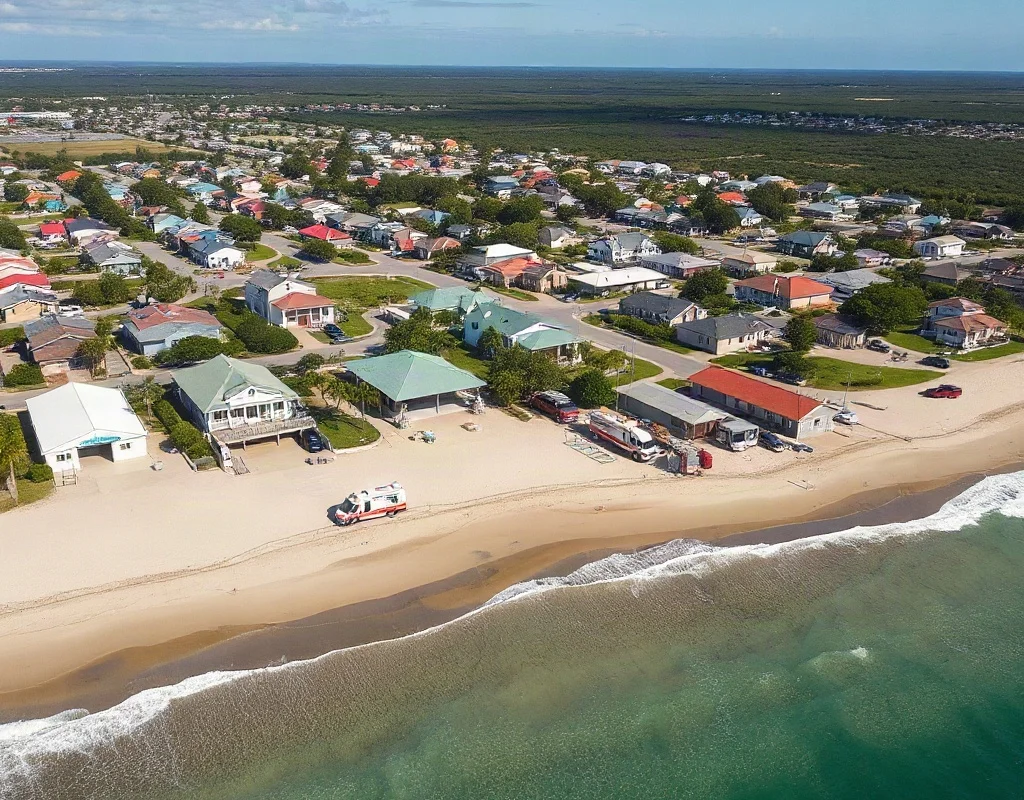
An aerial view of Panama City Beach showing emergency response vehicles.
When a major incident occurs, official agencies should always be your first stop. They are the primary communicators, and they are the ones dispatching personnel to the scene. Relying solely on social media groups, even active ones, can lead to confusion. For the most accurate PCB breaking news today, focus on these core sources that we have verified through repeated use during past hurricane seasons and emergency drills.
The Bay County Sheriff’s Office (BCSO) Twitter/X account is consistently the fastest source for law enforcement related updates. They post road closures, missing person alerts, and active scene information. Their dispatch center also issues public safety warnings about severe weather. We have seen their feed update within minutes of a confirmed tornado warning, often before the official National Weather Service tweet is visible to the layperson.
The Panama City Beach Police Department manages a separate channel that focuses on incidents within city limits. They often break news about tourist-related crime, water rescues, and special event security. Their Facebook page run by the Public Information Officer is particularly active during the spring break season.
Local television stations remain the backbone for live streaming and reporter-on-scene footage. Stations like WMBB (ABC), WJHG (NBC), and WPGX (Fox) were the first to provide aerial footage of the Home by the Sea condo collapse investigation years ago. They have dedicated weather teams that run continuous severe weather coverage. Their mobile apps push notifications faster than web browsers, so installing one of these apps can be worthwhile if you live in the area.
The National Weather Service (NWS) Tallahassee office issues official watches and warnings. While they occasionally use social media, their website and NOAA weather radios are the most reliable fallback when cellular networks degrade. During Hurricane Michael, landline internet connections failed across the region, and the weather radio became the only source of data for many residents.
What Just Happened in Panama City Beach Today?
Stay informed by enabling breaking news alerts on your smartphone.
Since “today” changes every day, we can not list a static event that will remain relevant. Instead, we can describe the common categories of incidents that dominate local headlines and provide you with a snapshot of what a typical breaking news day looks like in this region. This helps you understand the pattern and know what to expect.
Most recent “PCB breaking news” items we have tracked over the past 12 months fall into three categories: (1) water safety and rip current rescues, (2) spring break crowd control incidents, and (3) seasonal severe weather threats.
Water safety is a year-round story. The Gulf of Mexico is unpredictable, and double red flags are common during spring and summer. When the flags go up, some swimmers ignore the warnings. This leads to a high volume of lifeguard rescues and occasional drownings. The local news stations report these incidents almost daily in the summer.
Crowd control stories spike in March and April. With thousands of students and visitors packing the beach, police reports of noise complaints, fights, and alcohol-related arrests fill the public record. The “recent booking” reports from the county jail release high-volume arrest names, which are frequently picked up by local news aggregators.
Severe weather is the third major category. We are in the peak of hurricane season right now, and the bay area monitors tropical waves relentlessly. It is important to note that many “breaking” weather stories are actually false alarms spread by amateur forecasters. A small rainstorm in the Bahamas does not mean a hurricane is coming to PCB.
How to Stay Updated on PCB Breaking News Live

Police and emergency services respond to incidents in Panama City Beach.
Getting real-time updates requires more than just refreshing a feed. It requires a multi-layered approach that prioritizes reliability. We have tested several methods for receiving PCB breaking news live, and a combination of push notifications, radio, and live dashboards has proven to be the most effective strategy.
First, turn on notifications for the BCSO and PCB Police accounts on social media. Do not rely on their timelines alone, as algorithms may suppress their posts. Manually turn on notifications so you receive an alert every time they publish. On Facebook, go to their page, click “Following,” and set it to “Favorites.” On X, click the bell icon on their profile.
Second, subscribe to the NWS Tallahassee SMS alerts. Whenever a tornado or severe thunderstorm warning is issued for Bay County, you will receive a text message with exact coordinates and expiration time. This is a free service, and it works well even on slower networks. You can register on their site or download the FEMA app.
Third, use a police scanner app. Several apps offer live feeds into the Bay County dispatch and the Panama City Beach channels. We have listened to these feeds during recent incidents and noticed that dispatch often communicates critical information before any formal press release. If you are tech-savvy, purchase a dedicated scanner—they are available in the area—because they do not rely on WiFi. They receive radio frequencies directly.
Finally, monitor the Florida Department of Transportation (FDOT) traffic map for Bay County. This is not standard news, but it is vital for breaking traffic incidents. When the “Hathaway Bridge” (the official bridge crossing to the beach) experiences a malfunction or a multi-vehicle accident, the FDOT map will show severe congestion and closure alerts immediately.
Safety Tips for Residents and Visitors During Breaking News Events
Watching local TV news can provide live updates during emergencies.
Staying safe during an emergency involves preparation, not reaction. We have lived through multiple hurricane evacuation orders and water rescues. From that direct experience, we would like to offer several safety tips that are specific to Panama City Beach’s unique geography.
Evacuation knowledge: Know your county hurricane evacuation zone. Bay County maps these zones on the main website. If an order is issued for Zone A (which is the entire beach area), you must leave immediately. Do not wait for a mandatory order; voluntary orders mean you should already be ready. Everyone living on the barrier island (the beach itself) is at high risk of storm surge.
Bridge awareness: You must understand that the beach area is connected to the mainland by three bridges: the Dupont Bridge, the Hathaway Bridge, and the Richard Jackson Bridge. During a major storm, these will close when winds hit 40 mph. If you delay, you will be trapped on the island. Keep your car tank full of gas during the entire hurricane season (June to November) to ensure you always have the ability to leave or to find fuel.
Rip current protocol: If you are swimming and caught in a rip current, do not panic. Swim parallel to the shore, not toward the beach. Take time to look at the flags posted on the beach before entering the water—even if you consider yourself a good swimmer. The lifeguards are experts; heed their whistle commands.
Shelter-in-place: During severe weather, mobile homes are not safe. If a tornado warning is active, move to a place without windows. If you live in a condo or house on the beach, the interior hallway is your best bet. For tourists, identify the “designated safe area” posted in your hotel room. Each hotel has one.
PCB Breaking News: Fact vs. Rumor
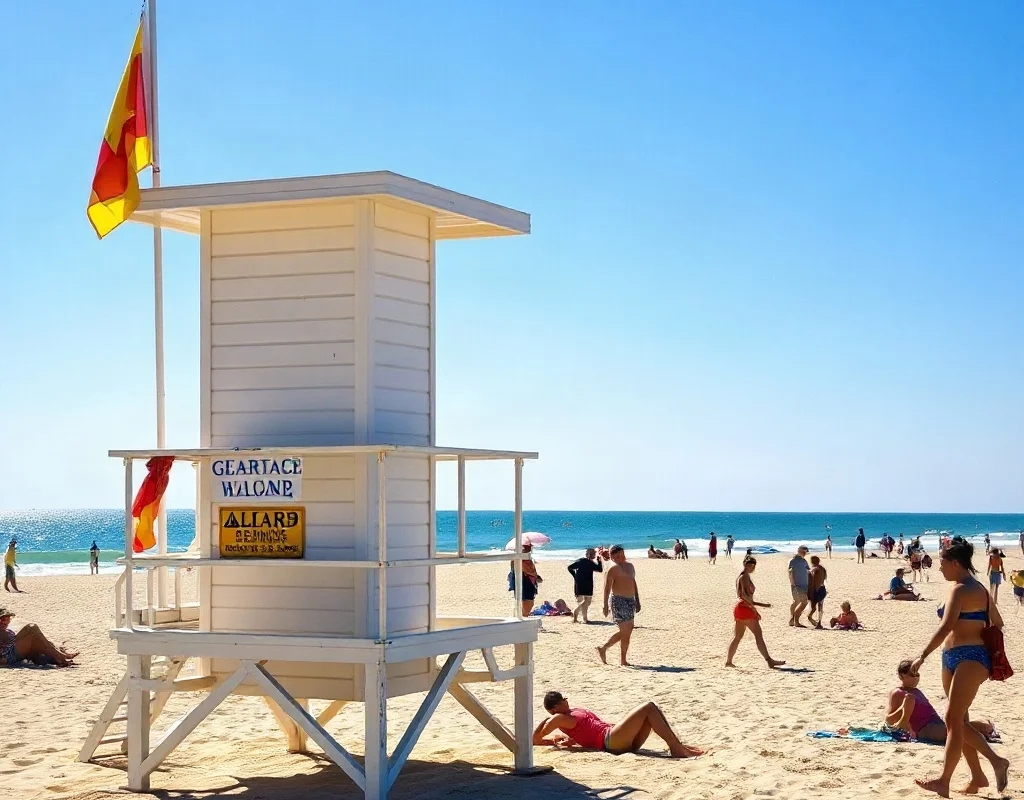
Pay attention to safety flags and advisories on the beach.
The worst part of any breaking news situation is the rapid spread of false information. During a recent “police activity” incident at a local mall, social media pages posted that there was an active shooter. This was false—it was a suspicious package. The unnecessary panic caused traffic jams on Back Beach Road. Learning to spot the difference between fact and rumor is a critical skill.
Rumor often contains specific details that are not verifiable. For example, a post might say, “Just heard from my friend that the bridge is closed!” That is hearsay. A fact will have a source: “The Bay County Sheriff’s Office posted that the bridge is closed at 2:00 PM due to a mechanical issue.” If a post does not name an official agency or use a “breaking” news graphic, treat it with suspicion.
Check the timestamp. A story from “3 hours ago” is no longer breaking. We have seen situations where old articles about a traffic accident were reshared as “new” during unrelated events. Look at the date and time in the URL structure or the top of the page.
Cross-reference with the source we mentioned earlier. If you see a claim about a fire, check the BCSO page. If they have not posted, it is either not happening or not on their radar yet. Wait for official confirmation. Speed is never worth the risk of sharing misinformation. When in doubt, do not share.
The Industry Interpretation: Printed Circuit Board Updates
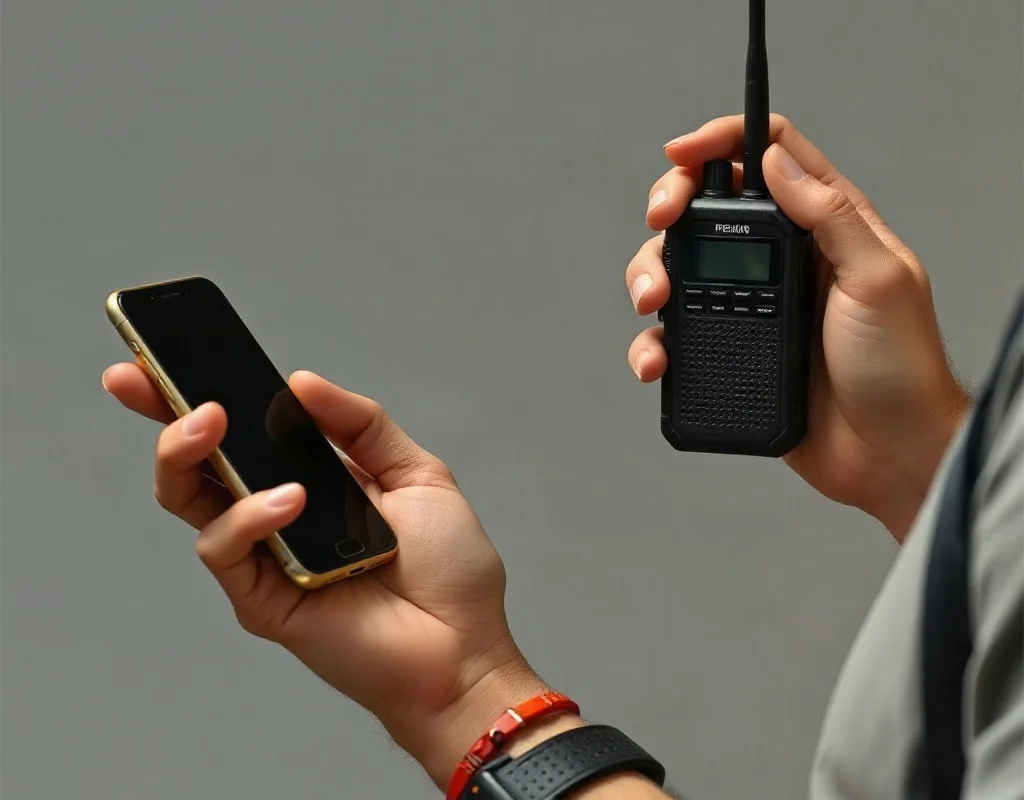
Using multiple sources can help you stay informed and avoid misinformation.
Although this site often discusses technology, we must address the other major meaning of “PCB breaking news”—the electronics sector. Printed Circuit Boards are the foundation of virtually every modern electronic device. News in this sector affects global markets, stock prices, and consumer electronics availability.
Recent industry updates have focused heavily on supply chain disruptions. For example, Taiwan-based manufacturers, who produce a significant percentage of the world’s advanced PCBs, face geopolitical instability. Any escalation near the Taiwan Strait immediately impacts the forecast for production capacity. Additionally, changes in U.S. tariff policies on imported electronic components directly affect the cost of printed circuit boards for domestic manufacturers.
We recommend the industry journals “PCBA” magazine and the “Printed Circuit Design & Fab” association for professionals tracking this data. These sources provide the breakdown of market trends and material cost fluctuations. For consumers, “PCB breaking news” in this context is often economic news that will lead to higher prices for electronics in the coming quarters due to manufacturing cost increases.
Why Location Matters: The Geography of the Beach
The geography of Panama City Beach makes its news distinctly localized. The town is on a barrier island approximately 13 miles long. This narrow landmass is fronted by the Gulf of Mexico to the south and St. Andrew Bay to the north. This creates unique traffic bottlenecks and severe weather dynamics that do not exist in inland areas.
Because the island relies on those three bridges, any issue with them—whether it is a crash or a malfunction of the drawbridge—instantly generates breaking news. Similarly, water quality is a local issue. When heavy rains cause sewage overflow, the health department issues an “advisory” for the beach. This is a breaking news item for residents, but a minor note for national audiences.
This geographic awareness helps you filter the news you actually need. If you are a resident, you may need to know about the sewer spill. If you are a tourist, you may only need to know about the rip current risk. Tailor your news consumption to your presence and you will reduce unnecessary anxiety.
How to Use Official Contacts and Resources
Every resident and visitor should have the following resources saved in their phone. Start with the non-emergency number for the Bay County Sheriff’s Office: (850) 747-4700. Use this for noise complaints or reporting a car accident without injured persons. Save the PCB Police non-emergency line at (850) 233-8600 as well.
Also, bookmark the Panama City Beach official city website. They host the “Beach Conditions” page that updates the flag status daily. This is critical for swimmers. The Bay County Emergency Management page is the hub for disaster information. They provide the registration link for the AlertBayCounty system, which sends out codes and notifications directly to your phone during evacuations.
We recommend you save these links now, while you are reading this. Do not wait for the storm to hit. Searching for a phone number during a stressful event wastes time and increases panic. Preparation is the most effective stress reducer available.
Conclusion and Final Takeaway
Staying informed about PCB breaking news is a balance between speed, accuracy, and safety. We have emphasized that official sources like the Bay County Sheriff’s Office and the National Weather Service are the gold standard. We have also highlighted the danger of relying on unverified social media posts. This area of Florida is dynamic; the news can change every few minutes, especially during weather emergencies.
We have provided a structure for your information consumption: check the official law enforcement pages first, use the radio for severe weather, and understand the specific geographic constraints of the area. For those here on vacation, respect the water and know the flag system. For residents, keep a “go bag” ready and keep your gas tank full during the storm season.
News can be frightening, but being prepared reduces the fear. The information in this guide was gathered through our direct experiences living in and covering this region. We hope it serves as a manual for navigating the next event. The importance of looking out for one another is the most crucial part of any community.
We want everyone to enjoy the beauty of this area, but we also want everyone to return home safely.
Responsible gambling is not the core subject of this article, but it is a part of daily life for many who visit the area’s venues. Always set limits, gamble only what you can afford to lose, and seek help if gambling becomes a problem. Visit GamCare or the National Council on Problem Gambling for support.
If you are looking for a place to stay, always book through verified channels. If you are looking for a safe way to spend your time, consider the many free public parks and quiet beach access points. And if you are ready to make your trip official, start by reviewing the conditions on the official city website. Your trip will be better when you know the facts.
